

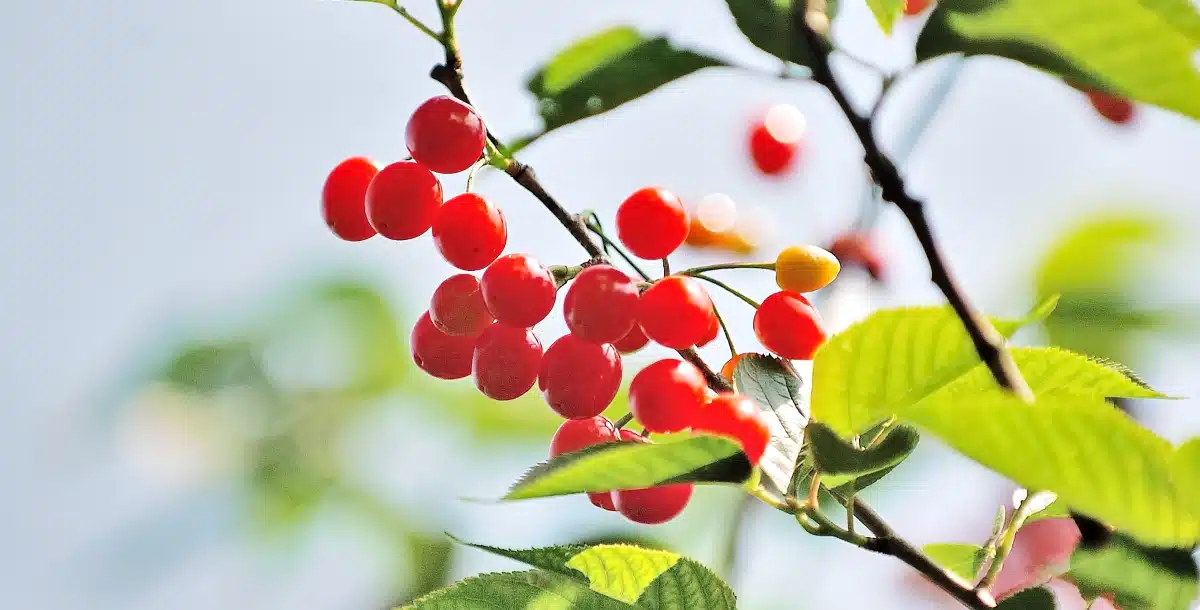
A cherry crop can look safe while the fruit is still green. Once color develops, bird pressure may rise quickly, and a loose cover installed at the last minute can create gaps, damage fruit, or trap wildlife. Commercial growers face another problem: a net that excludes birds may not be designed for hail, rain, or the loads created by a larger support system.
Choosing cherry tree netting therefore starts with a sequence of decisions. First define the threat. Then decide how the crop will be covered before finalizing the mesh, material, construction, and fixing method. This guide follows that path for a single garden tree, orchard rows, and larger commercial blocks.
Start With the Threat the Net Must Control
Before comparing mesh sizes, separate the problem into bird pressure, hail, rain, or insects. These risks can occur in the same orchard, but they do not always require the same cover.
| Primary risk | System to compare | What to confirm | Main limitation |
|---|---|---|---|
| Bird damage | Bird-exclusion netting | Target bird species, opening size, edge closure, local wildlife rules | Open edges or loose sections can defeat the barrier |
| Birds and hail | Hail-rated orchard netting that also provides bird exclusion | Mesh, fabric weight, fixing points, support structure, local hail and wind exposure | A standard bird net is not automatically a hail net |
| Rain cracking | Purpose-designed rain-cover system | Roof material, runoff, drainage, ventilation, cultivar and harvest timing | Open bird netting does not keep rain off the fruit |
| Flying insects | Insect-exclusion mesh | Target pest, aperture, ventilation and pollination plan | Fine insect mesh changes airflow and pollinator access |
If birds are the only concern, a dedicated bird net can be the simplest physical barrier. If the orchard also faces hail, the buyer should compare a net and support system intended for that exposure. Rain cracking needs a separate discussion: the Australian Cherry Production Guide treats rain covers, drainage, and orchard water management as connected decisions.
Growers who are still comparing netting with visual or sound deterrents can first review our guide to protecting cherry trees from birds. The rest of this page focuses on choosing and using the net itself.
Define the Coverage System Before Finalizing the Net Specification
Once the threat is clear, decide how much of the planting must be enclosed. Tree height, training system, row layout, harvest access, machinery, and labor can change the practical choice. The coverage approach and net specification should ultimately be checked together, especially where hail, fine insect exclusion, or a permanent support structure is involved.
| Coverage method | Where it can fit | Advantages | Questions to resolve |
|---|---|---|---|
| Selected branches or one small tree | Home gardens, young trees, or a limited crop | Uses less material and is easier to remove | Can the net stay away from fruit and close tightly at the base? |
| Individual framed tree | Small orchards or irregular tree spacing | Separates the net from the canopy and allows tailored coverage | Is the frame tall enough for growth and suitable for local conditions? |
| Row drape | Uniform rows with seasonal deployment | Covers several trees with fewer separate closures | How will the ends, ground edges, overlaps, and harvest access be managed? |
| Overhead or full-block enclosure | Larger commercial orchards | Creates one managed barrier around a production block | What clearance, access, drainage, anchoring, and local design requirements need to be resolved? |
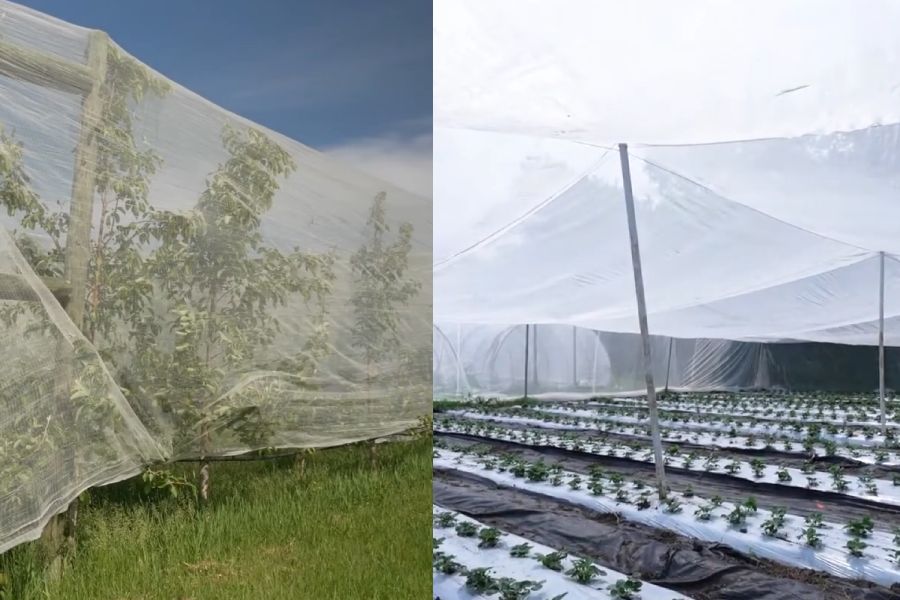
Draped netting vs overhead netting
A loose sheet directly on a large canopy may be difficult to close and remove without snagging branches. A frame or row system usually gives the installer more control over tension and access. For a permanent commercial enclosure, the support structure becomes a separate project rather than a simple net purchase, so anchoring, spans, access, and local weather loads need to be considered during design.
Select Mesh Size for the Target and the Location
After the coverage layout is known, mesh size has a useful context. The opening must exclude the target animal, work with the fixing system, and meet any local wildlife rules.
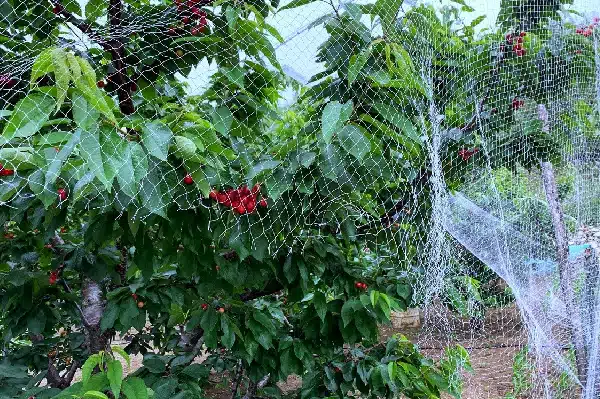
Cherry Tree Netting Mesh
There is no universal opening for every cherry tree. Bird species and regulations vary by country and sometimes by state. For example, Victoria requires netting used on household fruiting plants to have openings of 5 × 5 mm or less at full stretch. The rule does not apply to commercial orchards, but it shows why buyers should check the law for the actual use location. Agriculture Victoria also warns against throwing netting loosely over a tree or leaving it on the ground.
Commercial bird-net specifications may use larger openings where local rules, target species, and system design allow them. INSONSHADE currently lists 15 × 15 mm and 20 × 20 mm HDPE bird-net options, plus custom sizes. Those figures are supply options, not a recommendation for every orchard or household tree.
Hail netting follows a different specification path. Current INSONSHADE YCT60 and YCT70 options list 3 × 5 mm and 2 × 4 mm openings. A smaller opening alone does not prove that a net suits a hail project. Fabric construction, weight, fixing points, span, tension, and the supporting structure also matter.
Fine insect-exclusion mesh follows another sizing logic. The aperture should be selected for the target pest, while airflow and pollinator access must also be considered. If insect exclusion is the main objective, specify it as a separate requirement rather than simply choosing the smallest available bird-net opening.
Compare Material and Net Construction as One Specification
Mesh size narrows the choice, but the polymer name still does not describe the finished net. Two HDPE nets can behave differently because of yarn, UV stabilization, knitting or weaving, edge reinforcement, weight, and production tolerance.
INSONSHADE supplies UV-stabilized HDPE bird netting in Leno-woven and Raschel-knitted structures. These constructions differ in how the net is formed and handled, so the choice should be checked against the required opening stability, installation method, and a current sample or specification sheet rather than selected from the construction name alone.
Before approving a commercial order, ask the supplier to confirm:
- polymer and virgin or recycled material content;
- mesh shape and opening under the stated stretch condition;
- yarn or thread size and finished fabric weight;
- roll width, roll length, seams, reinforced edges, and fixing points;
- UV stabilization evidence and the conditions behind any warranty;
- color, dimensional tolerance, packaging, labeling, and batch consistency;
- available samples and test or performance documents.
These details help a grower compare installed systems. They also help a distributor avoid offering one specification for markets with different wildlife rules, orchard layouts, and service-life expectations.
Measure the Tree or Orchard Before Requesting a Quote
Once the net specification is defined, calculate material from the real coverage shape. Planted area alone is not enough because side drops, end closures, overlaps, doors, repairs, and irregular boundaries add material.
1. For a Single Cherry Tree
Record the canopy height and maximum spread after pruning. Then add enough width for both side drops, ground or trunk closure, and fixing allowance. If a frame will hold the net away from the fruit, measure the frame rather than the branches.
2. For Orchard Rows
Record every row length, row spacing, canopy width, tree height, and end closure. A row drape also needs allowance for the top profile, both sides, overlaps, access openings, and the selected fixing method.
3. For an Overhead Block
Provide a site plan with the block dimensions, perimeter, slope, post grid, target clearance, doors, and sidewalls. Mark any irregular edges as well. For a permanent supported system, soil conditions, unsupported spans, anchors, and relevant local weather loads should be addressed as part of the structural design.
A useful request for quotation begins with the orchard location, protected area, tree training system, dimensions, and target birds. Add the hail history, preferred layout, installation season, expected service life, and site photos. Without these inputs, a low unit price does not show the true installed cost.
Install the Net Without Creating Gaps or New Risks
With material ordered, installation timing becomes the next decision. For seasonal bird exclusion, prepare the system before birds concentrate on coloring fruit. If the net blocks pollinators, close it only after the required pollination period and follow local crop advice.
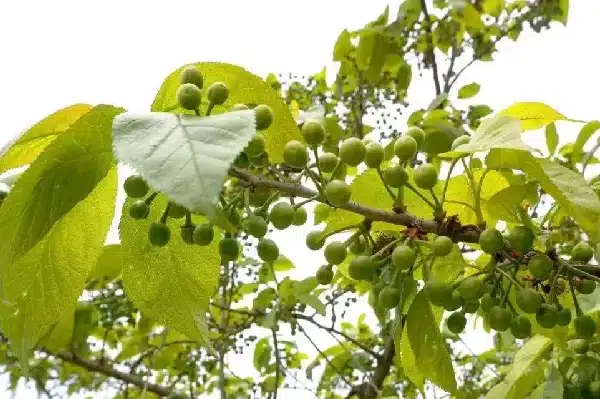
Unripe Cherries
Keep the net controlled and tensioned rather than loose on the canopy. Close the bottom, ends, seams, and door areas so birds cannot enter and become trapped inside. The net should also stay far enough from exposed fruit to prevent birds from reaching through the opening.
Walk the boundary after installation and during the season. Repair tears, lifted edges, failed clips, and sagging sections. Home users should check netted trees frequently for trapped wildlife. Seasonal nets should be cleaned, dried, repaired, and stored away from direct sunlight and sharp objects after removal.
Permanent commercial systems need more than routine fastening. Their anchors and frames need to suit the site conditions and applicable local requirements. The net supplier can help define the fabric specification, while the supporting structure may need separate local design or installation input.
How Current INSONSHADE Netting Options Fit These Requirements
The earlier steps narrow the project by threat, coverage method, mesh requirements, and installation conditions. The final step is to compare those requirements with an available specification rather than selecting a product by name alone. The options below reflect current published INSONSHADE specifications and are not universal prescriptions for cherry orchards.
| Current option | Published specifications | Where to evaluate it |
|---|---|---|
| HDPE bird net rolls | 15 × 15 mm, 20 × 20 mm, or custom openings; 1.5–5 m or custom roll widths; Leno or Raschel structures | Commercial bird-exclusion projects and wholesale programs after target species and local rules are confirmed |
| YCT60 / YCT70 Leno hail netting | 3 × 5 mm or 2 × 4 mm mesh; 60 or 70 g/m²; up to 5 m seamless width; published limited-warranty terms vary by specification | Projects that need hail and bird protection, subject to final net and support-system review |
Confirm the current data sheet, warranty conditions, sample, packaging, production tolerance, minimum order requirements, and delivery terms before placing an order. Custom mesh or roll dimensions should also be reviewed against the installation plan before production.
Frequently Asked Questions
1. When should cherry tree netting be installed?
Prepare the net before birds begin concentrating on ripening fruit. If the enclosure limits pollinator access, complete the required pollination period before closing it and follow local crop guidance.
2. How do you cover a large cherry tree?
A frame, row drape, or larger enclosure is often easier to tension and close than a loose sheet on the canopy. Measure the tree or row after pruning, then plan access, edge closure, fixing points, and safe removal.
3. How long does cherry netting last?
Service life depends on the polymer, UV stabilization, construction, exposure, tension, handling, and storage. Compare the written warranty and its conditions rather than relying on a material name alone.
Final Thoughts
A useful cherry-net quotation should begin with the orchard, not a catalog number. Confirm the target threat, tree or row dimensions, local wildlife rules, coverage layout, structural conditions, and installation window before choosing a mesh.
For a commercial orchard or distribution program, send INSONSHADE the project location, dimensions, target animals, weather risks, preferred roll format, and site photos. Our team can then identify which current bird- or hail-net specifications deserve a closer sample and technical review.