

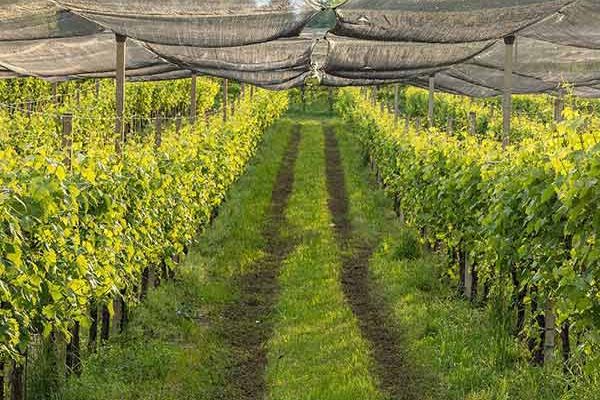
For HDPE netting wholesalers and project buyers, choosing the right specification, material, and use case can be harder than it looks. As the global plastic shade net market (with HDPE as the main material) continues to expand, HDPE netting has evolved from a niche, single-purpose product into a cross-industry protection solution. So, where is it actually used? What does each net type match in real-world projects? And how should you select the right netting for different customer needs?
As INSONSHADE, with years of experience in HDPE netting manufacturing and wholesale, we’ve summarized 16 common applications of HDPE nets. This guide helps you quickly understand how HDPE netting is used across agriculture, construction, industry, municipal projects, and public infrastructure and how the technical logic behind each net type supports its intended use. Our goal is to help you avoid common detours and choose the right solution faster.
What Is HDPE Netting? Industry Overview
Before diving into applications, let’s clarify what HDPE netting is. HDPE netting (High-Density Polyethylene Net) is a lightweight protective net made from woven or knitted high-density polyethylene fibers. It’s known for high strength, weather resistance, UV stability, and corrosion resistance. These properties make HDPE netting widely used in agriculture, greenhouses, protection projects, construction, municipal facilities, and industrial sites. Compared with standard PE or nylon nets, HDPE performs better in tensile strength and long-term aging. With UV stabilizers, outdoor service life can typically reach 3–10 years, making it a reliable and cost-effective protection material across industries.
Before the 16 applications, we’ve organized the use cases by industry so you can quickly locate what’s relevant to your project and reduce time spent filtering information.
| Industry | No. | Application | Typical Use | Common Specs / Notes |
| Agriculture | 1 | Anti-bird Netting | Protecting grapes, cherries, and blueberries from birds | 15–25 mm opening |
| 2 | Hail Netting | Orchard hail protection and impact buffering | 4–10 mm small openings | |
| 3 | Insect & Fruit Fly Netting | Insect protection for tomatoes, cucumbers, strawberries, etc. | 40–80 mesh fine netting | |
| 4 | Shade & Anti-sunburn Netting | Reduce light and temperature; prevent sunburn | 30–80% shade rate | |
| 5 | Windbreak Netting | Orchard boundaries, greenhouse entrances, coastal farms | ~40% wind permeability; vertical installation | |
| 6 | Aquaculture Netting | Ponds and cages; anti-escape and anti-bird | High tensile strength; salt-spray resistant | |
| 7 | Home & Garden Netting | Garden fencing, privacy screening, balcony safety netting | Lightweight, easy to install, cost-effective | |
| Construction | 8 | Scaffold & Debris Netting | Stops falling debris from facades | Reinforced HDPE; UV and tensile strength |
| 9 | Fall Protection Netting | Worker fall arrest for high-elevation work | Thicker/stronger; energy absorption | |
| 10 | Construction Shade / Wrap Net | Visual screening and dust reduction | Medium density; UV resistant | |
| 11 | Dust Control Netting | Covering soil/sand piles to reduce dust | Breathable, lightweight, UV-resistant | |
| Industry & Logistics | 12 | Dust, Bird, and Separation Netting | Stockpile dust control, material covering, and site separation | Engineering grade; wind-load and corrosion resistance |
| Public Infrastructure | 13 | Waterway Debris Netting | Intercept floating debris in reservoirs and waterways | Used with floats and anchoring systems |
| 14 | Municipal Landfill & Dust Nets | Dust control for dumps and waste sites | High tensile strength; long-term outdoor use | |
| 15 | Sand Control Netting | Desertification control; road/rail wind-sand management | 20–40% porosity | |
| 16 | Transportation Infrastructure Netting | Sand control, bird control, and area separation | Works with fencing and bird deterrent systems |
16 Applications of HDPE Netting Across Four Industries
From the properties and overview table above, you can see how HDPE netting performs reliably across multiple industries. Next, we’ll walk through 16 typical applications by industry to help you understand how each scenario works and how to choose the most suitable netting for your project.
We’ll start with agriculture, the largest and most common application area for HDPE netting. These seven scenarios are the most typical agricultural uses. From commercial orchards to field crops, from large-scale greenhouses to home gardens, and from land farming to aquaculture, HDPE netting is widely used. That versatility is also why agriculture has been one of the fastest-growing segments in recent years, according to market research.
1. Anti-Bird Netting
If you grow grapes, cherries, or blueberries, you know birds can be faster than you. HDPE anti-bird netting is designed to keep these “uninvited guests” out – lightweight and light-permeable, but difficult for birds to penetrate. Once installed, you don’t have to guard the orchard all day, and the fruit can ripen safely. Most orchards use 15–25 mm openings, which deter common birds while allowing light and airflow.
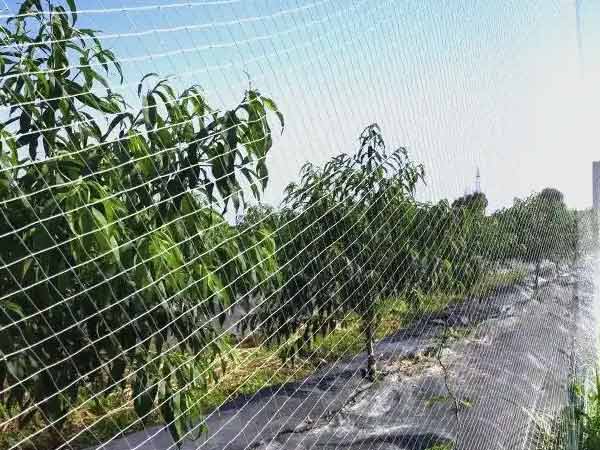
Anti-bird netting in a cherry orchard
2. Hail Netting
If your region sees unexpected hailstorms, one event can destroy a season’s investment. HDPE hail netting acts like a protective “impact umbrella,” buffering hail impact to protect fruit and branches, helping keep yields stable. A common choice is 4–10 mm small openings, which distribute impact while keeping the net strong and durable.
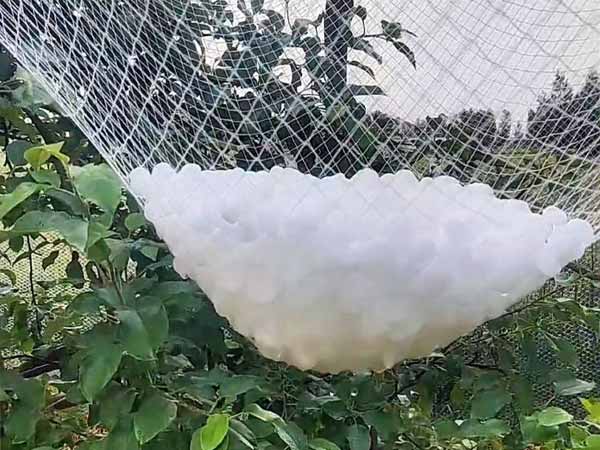
HDPE Hail netting
3. Insect & Fruit Fly Netting
For crops such as tomatoes, cucumbers, peppers, and strawberries, pests like whiteflies, thrips, and fruit flies can be difficult to control. HDPE insect netting uses fine mesh to keep small insects out while maintaining ventilation, so plants can continue to grow well. Because it targets tiny pests, this netting is specified by mesh count rather than opening size. Common options are 40–80 mesh.
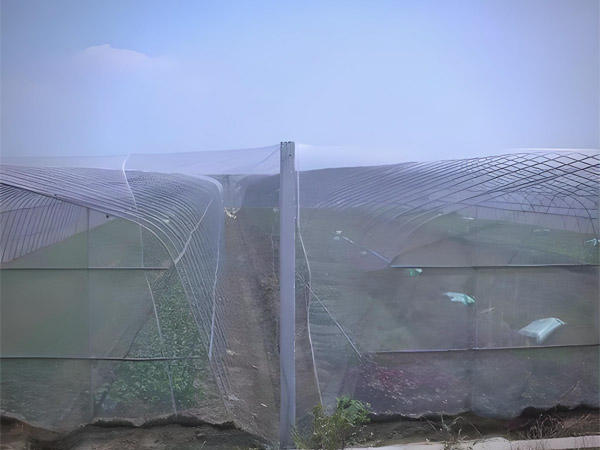
HDPE Insect netting
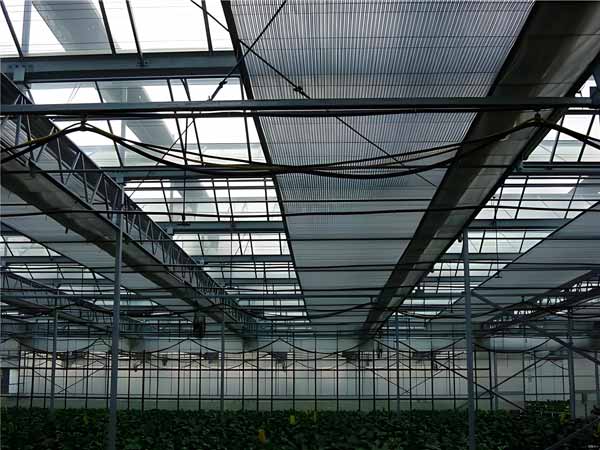
4. Shade & Anti-Sunburn Netting
For “sun protection,” HDPE netting primarily provides shade, allowing crops to breathe under high heat and intense sunlight without overexposure. Shade performance is typically expressed as a shade rate, such as 30%, 50%, or 70%. For guidance on choosing the right shade rate based on climate and crop, refer to our other article, Best Shade Cloth for Commercial Greenhouses.
5. Windbreak Netting
In vineyards and orchards (such as grapes, apples, and kiwifruit), growers often install HDPE windbreak netting along boundaries or overhead to reduce sudden gusts to safer levels. In greenhouses, it’s commonly installed at vents or side openings to reduce wind and insects while maintaining necessary air exchange. In coastal areas, it’s also used as a wind barrier around farms and aquaculture ponds to mitigate salty spray and strong winds.
A typical choice for windbreak netting is around 40% wind permeability, which reduces wind speed without causing severe turbulence on the windward side. For best results, windbreak netting should be installed perpendicular (90°) to the prevailing wind direction.
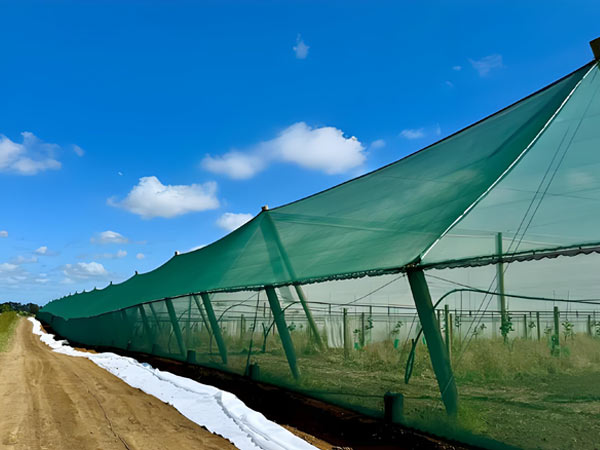
In a kiwifruit orchard, side covering can effectively reduce lateral wind from outside
6. Aquaculture Netting
HDPE netting is also common in aquaculture. It offers high tensile strength and resists sunlight and water exposure, so it’s less prone to premature aging when used long-term around ponds. It can be used to contain fish and prevent escapes, and to install over the water surface as anti-bird netting to deter birds like herons and gulls. In high-salinity coastal environments, its salt-spray and corrosion resistance is especially valuable.
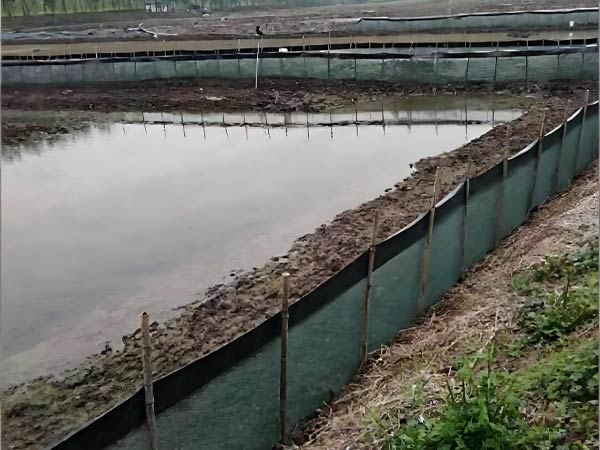
Aquaculture fencing
7. Home & Garden Netting
Many agricultural use cases also apply at the home-garden scale. In small vegetable gardens, yards, and balconies, HDPE netting is a versatile helper. It is lightweight, easy to install, and cost-effective.
Whether it’s garden fencing, privacy screening, balcony safety netting for children/pets, or a simple fruit tree bird cover, HDPE netting can do the job. For users who want an easy way to improve protection and the gardening experience, it’s one of the most convenient options.
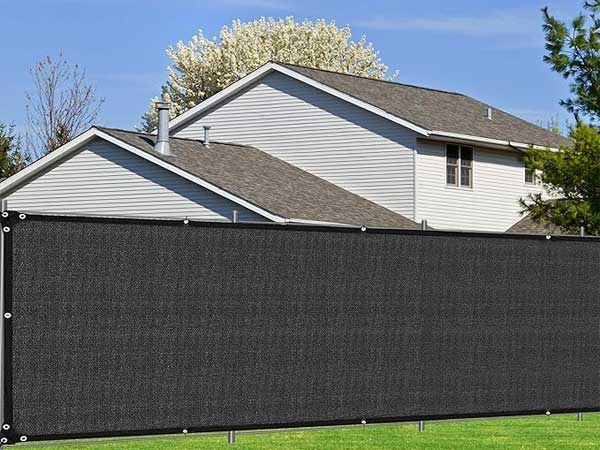
Yard privacy netting
Next, items 8–11 cover construction and jobsite applications. These net types can look similar, but their functions are very different. The following sections will help you quickly tell them apart.
8. Scaffold & Debris Netting
The green or blue netting you often see on building facades is typically scaffold & debris netting. Its job is simple: if tools or fragments fall during construction, the net catches them to reduce risk to pedestrians and workers. HDPE resists sunlight, maintains tensile strength, and ages slowly outdoors, making it a basic and essential perimeter protection layer.
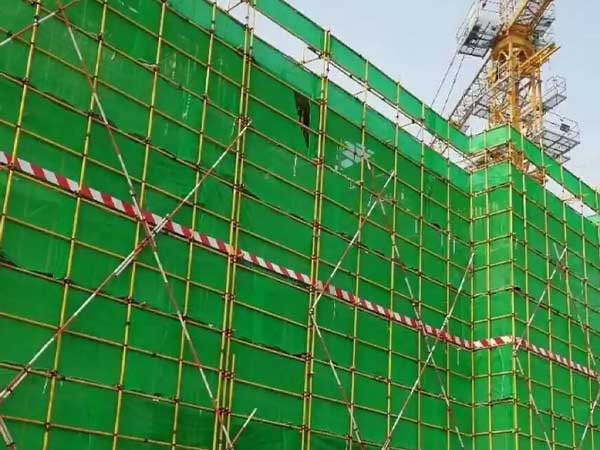
Scaffold safety netting
9. Fall Protection Netting
In multi-story construction and elevated work, accidental falls are a major risk. This type of netting isn’t hung on the facade; it’s installed at floor edges, openings, or below work areas to prevent falls. Compared with scaffold netting, it is thicker and stronger and provides buffering and protection as a last line of defense.
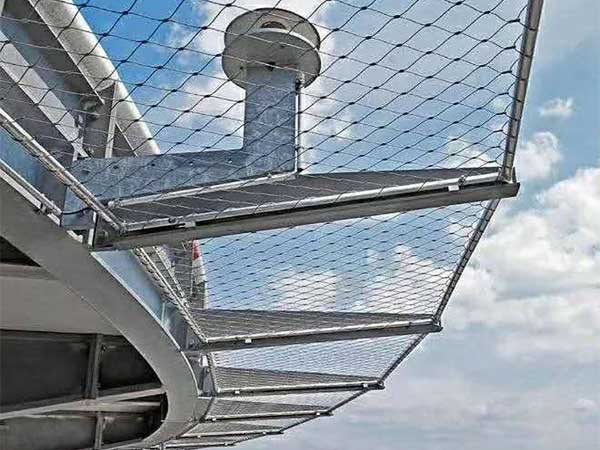
Fall protection safety netting
10. Construction Shade / Wrap Net
Some job sites “wrap” a whole building with colored netting. This is usually construction shade/wrap netting. It isn’t designed to catch debris. Instead, it helps screen visibility, reduces dust, and provides some shading in hot weather. It improves the site’s visual appearance and reduces its impact on nearby residents.
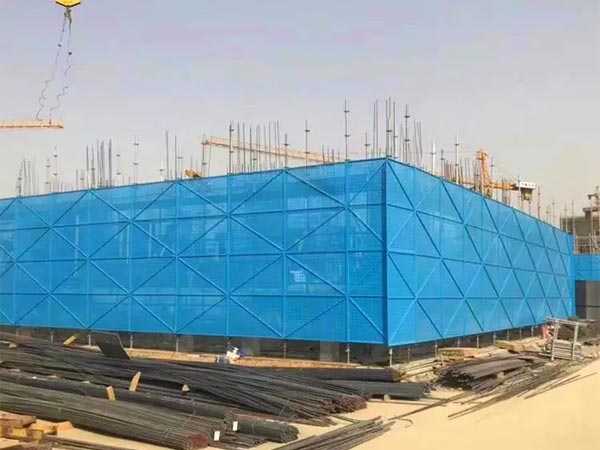
Construction shade/wrap netting
11. Dust Control Netting
Dust control netting is not hung on walls. It’s placed directly over exposed ground, soil piles, sand piles, or aggregate piles to “hold down dust.” HDPE dust nets are breathable, lightweight, and UV-resistant, especially useful on windy days or during environmental inspections, helping reduce dust spread and improve on-site and surrounding air quality.
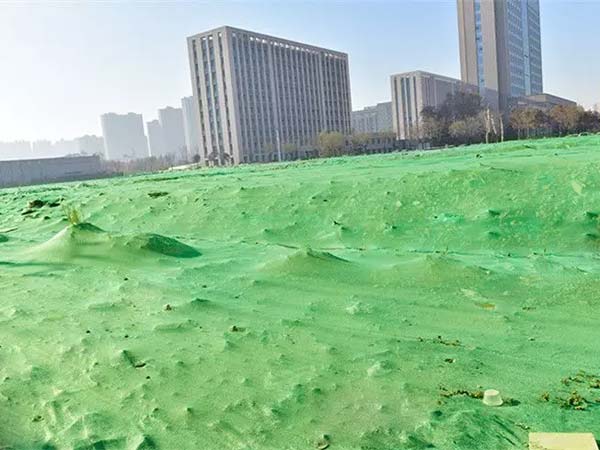
Construction dust control netting
12. Industrial & Logistics Applications
Compared with agriculture and construction, HDPE netting is less visible in industrial and logistics settings, so we’ll summarize it here in a compact way. Its three core uses are: stockpile dust suppression, large material covering, and lightweight separation around plant perimeters or equipment areas. In industrial stockyards, common materials such as coal, ore, sand, and stone are stored in large piles for long periods. Standard construction dust nets often can’t withstand wind load or long-term weather exposure. Engineering-grade HDPE dust nets are thicker, stronger, and more wear-resistant, making them a standard configuration for ports, mines, terminals, and bulk storage yards.
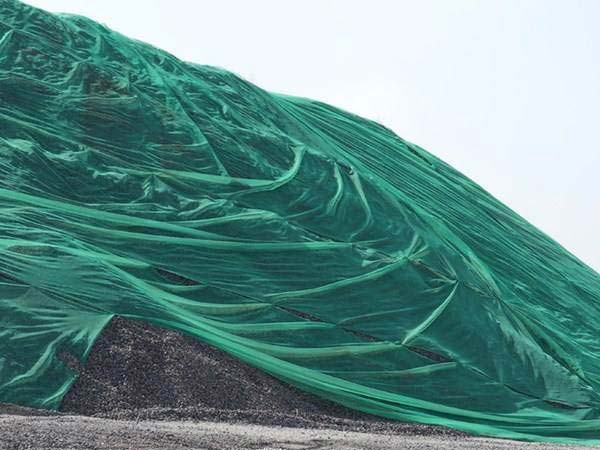
Coal pile covering netting
Many factories and warehouses also use HDPE netting for lightweight separation, for example, to keep birds out of workshops or food-processing areas, or to create basic protective barriers around equipment. It’s not a replacement for metal fencing, but for needs like “blocking, protection, and no rust,” it’s economical and durable.
In short, industrial HDPE netting prioritizes weather resistance, wind-load performance, and corrosion resistance, making it a typical engineering-grade protective material for long-term exposure to harsh environments. Items 13–16 move into the final sector: public infrastructure, where HDPE netting is also widely used.
13. Waterway Debris Netting
In reservoirs, rivers, and drainage outlets, HDPE floating debris nets are often used to intercept branches, plastic waste, and other floating debris, preventing gate blockages or damage to intake structures. In engineering projects, net strength and float combinations are selected based on flow rate, water-level variation, and flood conditions, and matched with local anchoring methods. Some sites also combine these nets with steel trash racks for staged interception and easier centralized cleanup.
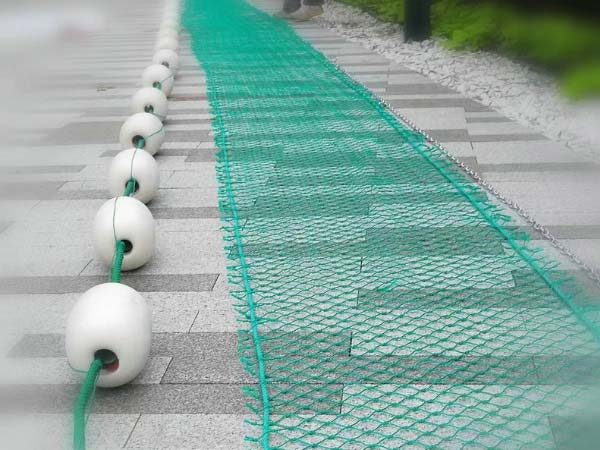
Waterway debris interception netting
14. Municipal Landfill & Waste Site Netting
At landfills, construction waste yards, or soil disposal sites, HDPE covering nets can be used to suppress dust and prevent lightweight waste from being blown away. However, this is not a mainstream approach in municipal solid waste management. It’s listed here mainly to show it can be an option in specific scenarios.
15. Environmental & Sand Control
In desertification control and wind-sand protection along highways and railways, HDPE sand-control netting is used to reduce near-ground wind speed and intercept sand particles. Research often recommends a porosity of 20–40%, with the height and layout optimized based on road position and wind direction to achieve better protection. In real projects, sand-control netting is commonly combined with straw checkerboards, shrub belts, and other measures to form multi-layer windbreak and sand stabilization systems. See engineering examples.
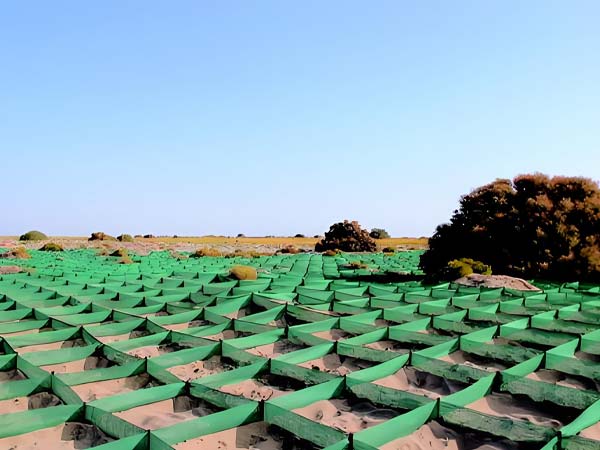
HDPE sand-control netting
16. Transportation Infrastructure Netting
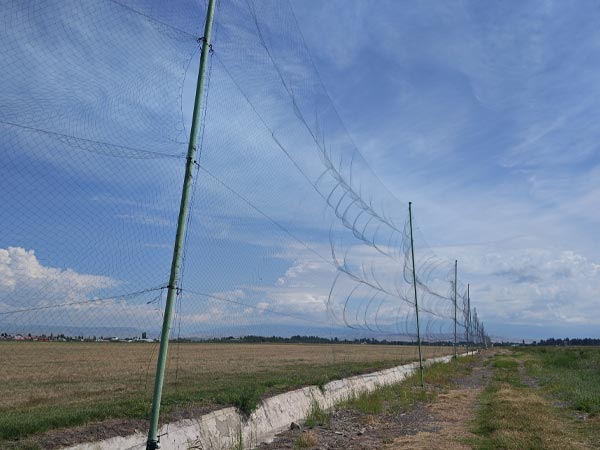
Around transportation infrastructure, HDPE netting is mainly used for wind-sand control or as auxiliary separation. On highways and railways crossing sandy areas, sand-control netting is installed to reduce lateral wind and minimize sand accumulation on subgrades. Its design follows similar principles to desert road sand barriers, and porosity and height are determined through wind tunnel tests or simulations. Reference In airport perimeters, some sites combine HDPE netting with metal fencing, razor wire, and bird deterrent systems to reduce bird activity and block large animals, aligning with relevant wildlife hazard management guidance. Guideline
How to Choose and Buy HDPE Netting
Whether you’re sourcing for agriculture, construction, or public infrastructure, the core of buying HDPE netting is choosing the right specifications first, then a reliable supplier. Start by matching the application with the right mesh/opening size (for example, 15–25 mm for bird netting, 4–10 mm for hail netting, and 40–80 mesh for insect netting), weight (GSM), UV stabilization level, and manufacturing method (knitted or woven).
These factors determine strength, weather resistance, and service life. For B2B and engineering projects, also evaluate whether the supplier has a robust quality system, including material testing, UV aging tests, batch traceability, and compliance with relevant standards (e.g., ASTM, OSHA, CE). If you need customization (size, color, reinforced edges, anti-aging formulation), confirm the details before ordering to avoid common mistakes such as mismatched mesh, missing edge reinforcement, or insufficient GSM, which shortens service life.
Conclusion
These 16 applications show that HDPE netting has evolved from a traditional agricultural product into a versatile protection material used across many industries, from orchards and construction sites to stockyards and public infrastructure. Its lightweight structure, aging resistance, high tensile strength, and easy installation are key reasons for sustained global demand growth. For wholesalers, contractors, and procurement teams, the selection and sourcing points summarized here can help you avoid common pitfalls early and make more confident decisions.
If you’re planning a project in agriculture, construction, industrial dust control, or public infrastructure protection and want durable, cost-effective, standards-aligned HDPE netting, contact INSONSHADE for technical support and customized solutions.