

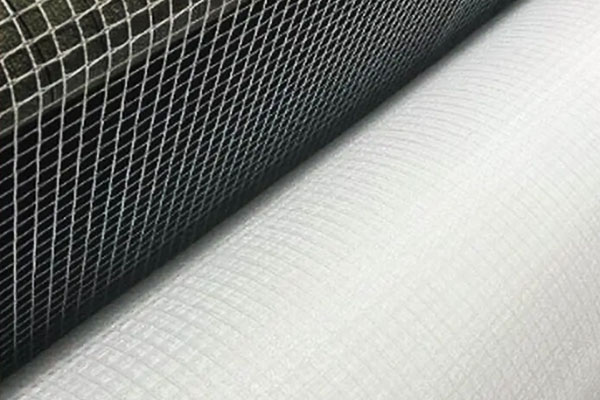
When buyers purchase anti-hail nets for the first time or want to change suppliers, they often face several important questions. If the budget is limited, should you choose a lower unit price or a longer service life? Is a Raschel structure or a Leno structure better for your orchard? With so many trading companies and online sellers in the market, how can you know whether a supplier really has stable production, quality control, and export delivery ability?
If these questions are not clearly checked at the beginning, problems may arise later. The samples may look fine, but the bulk order may arrive with lower GSM, weak UV resistance, uneven mesh, or a delayed delivery schedule.
To help B2B buyers choose anti-hail net partners more efficiently, we have collected information on several suppliers, including INSONSHADE. The information covers company background, product types, manufacturing ability, and procurement fit. You can use this article as a starting point for supplier evaluation. However, it should not replace real inquiries, sample testing, and factory audits.
For large-volume purchasing, we suggest getting quotations from several factories under the same specifications. You should also request samples for comparison. Do not only look at the price. You also need to confirm the raw material, GSM, UV additive ratio, tensile strength, packaging method, quality documents, and lead time. If the order volume is large and the situation allows, an on-site factory audit or a third-party factory audit can give you more confidence before placing the order.
Recommended Anti-Hail Net Manufacturers
INSONSHADE (China)
Founded in 1990, INSONSHADE is a China-based source manufacturer of agricultural protection nets. The company produces agricultural nets, shade nets, greenhouse screens, and related products. For B2B buyers, working directly with a factory can make communication easier on specifications, sample adjustments, and production schedules. China’s mature plastic weaving and agricultural net supply chain also gives buyers more flexibility in cost control and bulk delivery.
INSONSHADE produces both Raschel and Leno HDPE anti-UV anti-hail nets. Raschel anti-hail netting is suitable for orchards that need good overall strength, stable coverage, and long-term use. Leno anti-hail netting can be a stronger option for buyers who need good ventilation, light transmission, and basic hail protection within a more controlled budget. The final choice should still depend on your crop type, local hail intensity, support system, expected service life, and budget.
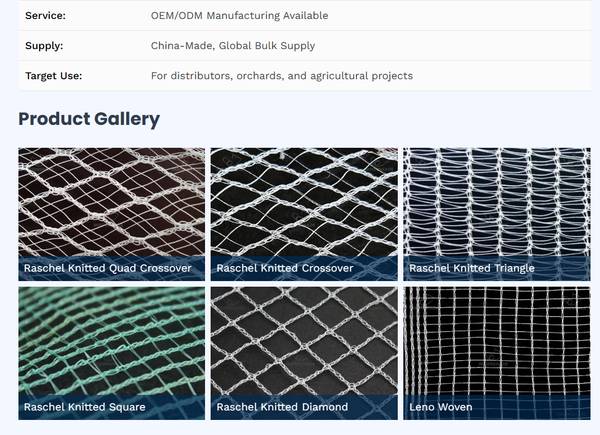
INSONSHADE hail net types
INSONSHADE supports customization in color, mesh size, GSM, roll width, and packaging. For overseas buyers such as importers, agricultural engineering contractors, and brand owners, customization and batch consistency are often more important than a slightly lower unit price. INSONSHADE is ISO 9001 certified and can arrange third-party testing through SGS, AWTA, or similar testing bodies when needed. If you want quality close to European or American standards, but with better cost control, buying directly from INSONSHADE is worth considering. However, minimum order quantities apply. This is a B2B wholesale model, not a retail purchase.
Haverford (Australia)
If your orchard is in Australia, New Zealand, or another region with strong UV, long sunshine hours, and harsh weather, Australian brands are worth checking. Haverford is one of the relevant names in this market.
Haverford has been operating in Australia for more than 130 years. The company has long experience in protection nets, shade nets, and agricultural netting. Because the Australian market has high levels of sun, heat, and UV exposure, Haverford has developed strong expertise in UV resistance, anti-aging performance, and outdoor durability.
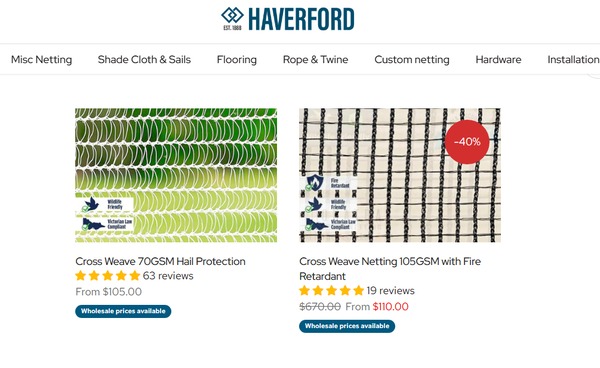
Haverford hail nets products
For anti-hail protection, one of Haverford’s main products is its X-Weave cross-weave anti-hail net, available in 40 GSM and 60 GSM options. Its value is not only about surviving one hailstorm. It is more about long-term performance under sun, wind, rain, and repeated outdoor use. If you care about brand history, local market experience, and reliability in high-UV areas, Haverford is a low-risk choice.
DrapeNet (Australia)
DrapeNet takes a different approach from traditional anti-hail net systems. Founded in the early 2000s by an orchard grower, the company developed a product based on real orchard use. Instead of using posts, wires, and fixed support frames, DrapeNet offers a soft covering net that can be placed directly over the trees.
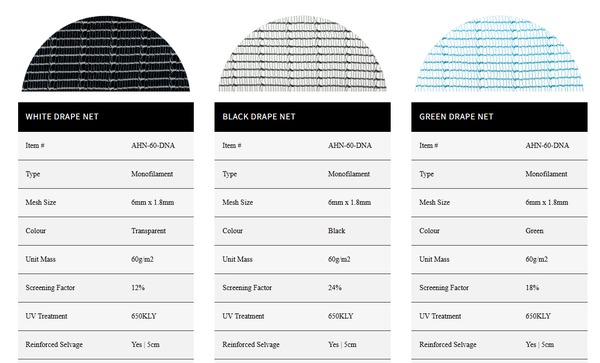
DrapeNet’s products
The net works like a blanket over the tree canopy. When hail falls, it slides off the net surface, which helps reduce direct impact on fruit and branches. This makes it useful for orchards that cannot install umbrella or flat-top frame systems, or for growers who want to avoid high upfront infrastructure costs. Another benefit is pest control. This covering method can also help reduce pressure from codling moth and other orchard pests. For growers in Australia or New Zealand who want to manage both hail damage and pest pressure with lower structural cost, DrapeNet is a practical option.
Arrigoni (Italy)
Founded in 1936, Arrigoni is one of Europe’s most established manufacturers of high-end agricultural protection nets. The company has spent decades refining high-performance netting to improve crop microclimates and protect orchards, vineyards, and high-value crops against extreme weather.
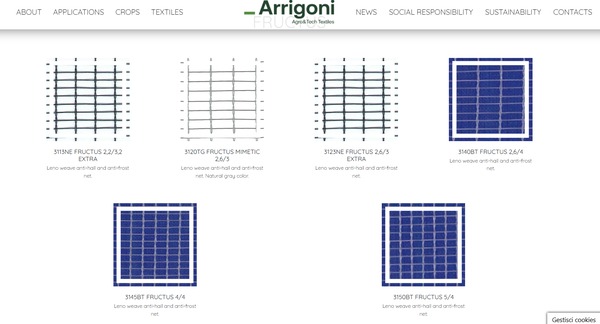
Arrigoni leno hail nets
Arrigoni’s anti-hail nets are HDPE Leno-weave products made from high-strength monofilament with a run-proof weave structure. The result is a net that is both extremely strong and structurally stable — if a thread does get damaged, the hole won’t easily propagate. This means it can withstand severe hail impacts as well as strong winds without losing mesh shape or protective integrity. What sets Arrigoni apart is not just hail protection but consistent performance across compounded stresses — wind, rain, and impact all at once. For high-end orchard projects that demand long-term durability, high weather resistance, and minimal maintenance, Arrigoni is a dependable European choice.
Garware Technical Fibres (India)
Founded in 1976, Garware Technical Fibres is a major Indian manufacturer of technical fibers and agricultural textiles. It is also one of the stronger net suppliers in South Asia. The company serves many sectors, including aquaculture, sports, fisheries, industry, and agriculture.
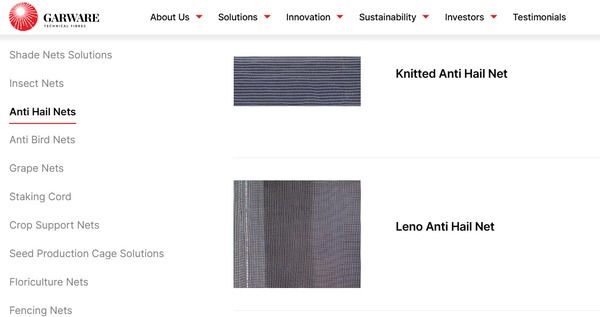
Garware Technical Fibres hail netting
For anti-hail nets, Garware offers both Leno and knitted options. Buyers can also customize roll width and length to match different orchard structures and budgets. Compared with premium European brands, Garware’s advantages are production scale, cost efficiency, and supply flexibility. For buyers in South Asia, the Middle East, and Africa, Garware can be a strong long-term partner. These markets are often price-sensitive, but buyers still need reliable quality and stable supply. In this situation, Garware offers a practical balance between cost and performance.
How to Choose the Right Hail Nets Supplier
After reviewing the major global suppliers, you still need to check two things carefully: product quality and the company’s actual production capacity. An anti-hail net may look like a simple piece of netting, but its service life depends on many hidden details. These include the manufacturing process, raw material, UV formula, GSM, and physical strength.
The following points can help you compare suppliers more clearly and avoid choosing only by price.
1. Manufacturing Process: Raschel vs. Leno
The weaving method is one of the most important factors in selecting anti-hail nets. However, many buyers ignore it at the beginning. Different production methods can lead to clear differences in strength, mesh stability, cost, and service life.
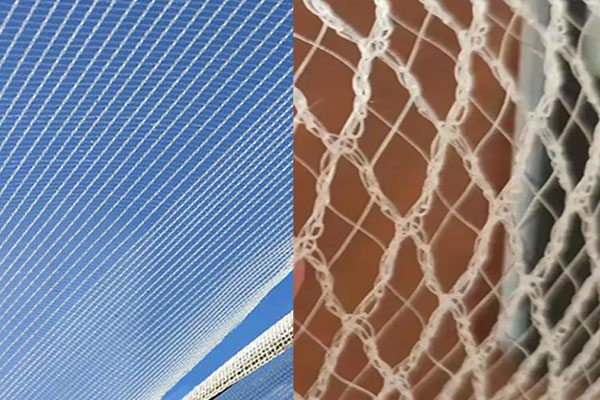
Hail Nets: Leno vs. Raschel
Before placing a large order, ask the supplier for production videos or factory photos. Check whether they use professional textile machinery and whether the production process looks stable. Factories with advanced warp-knitting machines or high-quality weaving equipment can usually produce nets with better consistency.
| Evaluation Factor | Raschel Warp Knitting | Leno Weaving |
|---|---|---|
| Physical Strength | Good strength; localized damage is less likely to propagate | Higher strength; mesh holds shape under wind load |
| Procurement Cost | Lower cost, faster production, more flexible on custom specs | Higher cost; requires more advanced looms and tighter process control |
If your budget is limited and the orchard is not in an extreme wind zone, Raschel anti-hail netting is usually enough. If your orchard is in a high-wind, high-altitude, or hail-prone area, Leno’s locked structure may be a better long-term choice.
2. Three Core Physical Parameters to Check
You cannot judge the quality of an anti-hail net only by appearance or price. A reliable supplier should be able to provide clear data and test information. When comparing different offers, these three parameters are especially important.
- First, check the raw material. For long-term orchard use, ask for 100% virgin HDPE. Recycled material can reduce the price, but it usually lowers durability. Under long-term sun exposure, wind, and stretching, recycled HDPE may become brittle and break earlier. This can shorten the real service life of the net.
- Second, check the GSM. Anti-hail nets are often available from about 40 to 70 GSM. A higher GSM usually means a thicker and more impact-resistant net. However, higher GSM is not always better. You also need to consider the tree structure, support system, wire load capacity, and local wind or snow load. If the GSM is too high for your project, it may add unnecessary cost and extra weight to the support system.
- Third, check the UV resistance rating, often shown as KLY. UV exposure is one of the main reasons outdoor nets age and lose strength. A higher KLY rating usually means the net can last longer under strong sunlight. For any orchard project expected to last five years or more, UV resistance should be treated as a core specification, not a small extra detail.
3. Verify Factory Credentials and Test Reports
To tell whether a supplier is a real factory or only a trading company, you need to look beyond the website. A good website does not always mean the supplier has real production ability. You should ask for proof of manufacturing capacity, quality control, and third-party testing.
- Start with ISO 9001 certification. For a serious factory, ISO 9001 shows that the company has a standard production process, quality control system, and shipment criteria. It also shows that the supplier is not only buying products from other factories and reselling them without stable control.
- Next, check whether the supplier accepts factory and product verification. For example, can they arrange an on-site audit, video factory tour, or live call from the production area? You can ask to see the raw material storage area, weaving machines, production lines, and packaging area. For a new supplier, it is also wise to request samples before placing a bulk order. Even if the samples are not free, testing them first can help reduce future risk.
- When checking samples, do not only look at the color or hand feel. You should also compare thickness, tensile strength, mesh density, color consistency, and overall finish. These details can show whether the supplier can keep stable quality in real production.
- Finally, do not rely only on the supplier’s own specification sheet. Anti-hail nets are used outdoors for many years, so the material grade, UV additives, and expected service life are very important. Ask for an SGS material test report, an AWTA UV resistance test, or a similar third-party lab report. These reports help confirm whether the product uses virgin HDPE, whether UV stabilizer has been added, and whether the net is suitable for long-term outdoor agricultural use.
4. Color and Customization Capability
A reliable anti-hail net supplier should not only sell standard sizes. For importers, wholesalers, and project buyers, the ability to customize is very important. It decides whether the product can match your local market, orchard structure, and packaging requirements.
When comparing suppliers, check whether they can customize color, mesh size, shade rate, roll width, roll length, GSM, and packaging. You should also ask whether they support branded packaging or private-label production.
- Color needs can vary by market. Black and green are common choices, but white, blue, red, and beige nets may be preferred in some regions. Color is not only about appearance. It can also affect shading performance, temperature under the net, and crop growing conditions.
- Mesh size should also be selected based on the real use. A net for bird protection is different from a net for insect protection, hail protection, general shade, or orchard separation. If a supplier can adjust mesh size, GSM, shade rate, and roll dimensions to suit your project, it usually indicates greater production flexibility.
- For wholesalers and brand owners, packaging is also part of the product. You should confirm whether the supplier can provide custom labels, carton specifications, fixed roll lengths, palletizing plans, and container-loading plans. These details may seem small, but they can affect warehouse handling, retail display, shipping cost, and final customer experience.
Conclusion
There is no single “best” anti-hail net supplier for every project. The better question is: which supplier is the right fit for your orchard, budget, climate, and target service life?
In this article, we reviewed several major anti-hail net manufacturers from China, Europe, Australia, India, and other regions. We also explained the key factors buyers should check before placing a large order. These details can help you distinguish between a real factory, a trading company, and a supplier that may not be suitable for long-term cooperation.
Before you start shortlisting suppliers, it is worth asking a few practical questions. Is your orchard mainly facing hail, wind, birds, or strong UV exposure? Are you planning for a 5-year, 10-year, or longer service life? Do you need standard rolls, or custom mesh size, GSM, color, width, and packaging? The answers will help you decide which supplier details matter most. They can also help you avoid choosing only based on price.
If you have already compared suppliers and net structures and now need a long-term wholesale partner with quality control, reasonable MOQs, and OEM/ODM support, you can contact us.